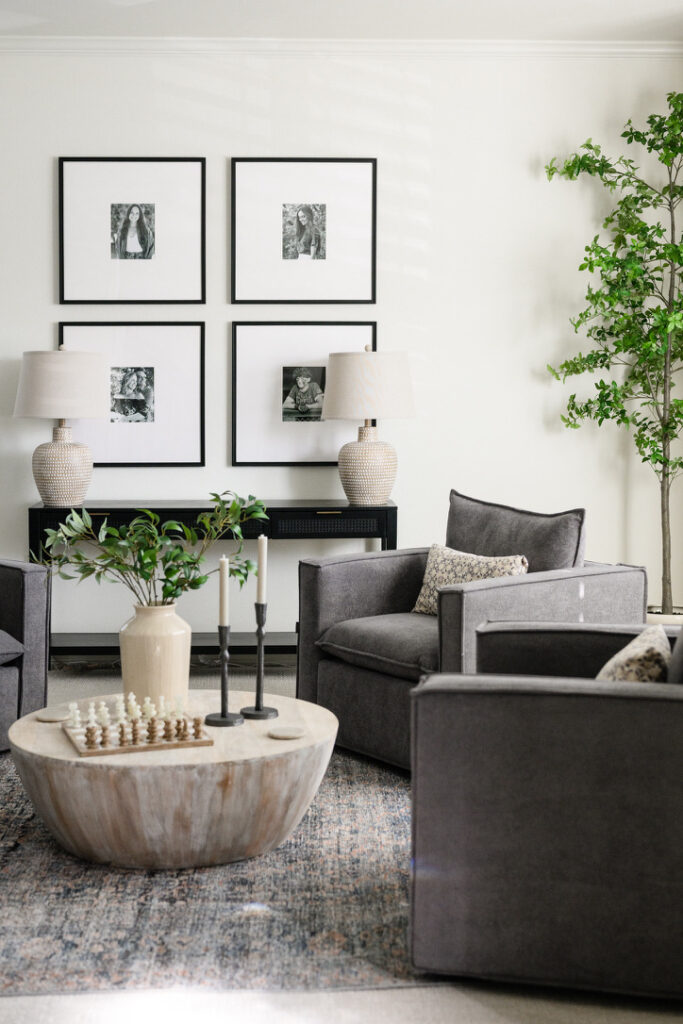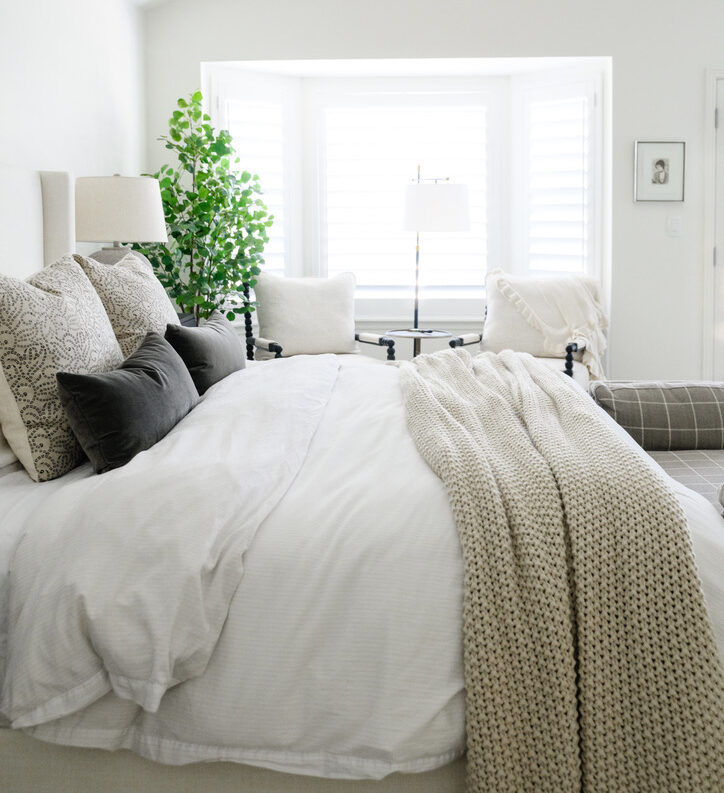
In a world filled with constant visual input, our homes should feel like a place to exhale. Yet many interiors, even beautifully furnished ones, can feel unsettled or overwhelming. This often isn’t due to a lack of style, but to a buildup of small design decisions that create what we call visual noise.
Visual noise occurs when too many competing elements vie for attention, leaving a space feeling busy rather than balanced. Designing with clarity requires restraint, intention, and an understanding of how elements work together over time. Below are some of the most common design choices that contribute to visual noise, and how to approach them more thoughtfully.
Mixing Too Many Finishes Without a Through Line
While variation can add interest, too many unrelated finishes in a single space can quickly feel chaotic. When metals, woods, and materials are introduced without a unifying logic, the eye has nowhere to rest.
A more intentional approach:
Limit your core finishes and repeat them subtly throughout the home. A consistent metal finish or wood tone doesn’t create monotony, it creates cohesion. Thoughtful repetition allows a space to feel layered without feeling cluttered.
Over-Decorating Every Surface
When every tabletop, shelf, and wall is styled, rooms can begin to feel visually heavy. Accessories that are individually beautiful can collectively overwhelm when there’s no pause between them.
A more intentional approach:
Edit with purpose. Allow negative space to exist. A single meaningful object often carries more impact than several smaller ones. Let rooms breathe so the most important elements can shine.
Chasing Trends Instead of Building a Foundation
Trend-driven pieces can be exciting, but when layered too heavily, or without a timeless foundation, they can quickly date a space. Visual noise often comes from mixing too many trend moments at once.
A more intentional approach:
Invest in foundational pieces that are classic in proportion and material. Use trends sparingly, in elements that are easy to change such as: textiles, accessories, or art. This allows a home to evolve without feeling disjointed.
Inconsistent Scale and Proportion
Furniture and decor that don’t relate to one another in scale can make a room feel unsettled. Too many small pieces, undersized rugs, or mismatched furniture heights disrupt visual flow.
A more intentional approach:
Choose fewer, better-proportioned pieces. Proper scale anchors a space and creates a sense of ease. When furniture relates well to the room and to each other, the result feels intentional rather than pieced together.
Ignoring Lighting as a Design Element
Relying solely on overhead lighting flattens a room and contributes to visual imbalance. Without layered lighting, even the most beautiful spaces can feel harsh or unfinished.
A more intentional approach:
Incorporate multiple light sources, ambient, task, and accent lighting, to create depth and warmth. Lighting should enhance architecture and atmosphere, not compete with it.
Lack of Cohesion Between Rooms
When each room is designed in isolation, the home can feel fragmented. Visual noise often appears in transitions where palettes, finishes, or styles abruptly change.
A more intentional approach:
Design the home as a whole. Subtle repetition of materials, tones, and forms creates a natural flow. Each room can have its own personality while still belonging to a cohesive story.
Designing for Clarity and Calm
The most refined interiors aren’t necessarily minimal, they’re considered. Reducing visual noise isn’t about removing personality, but about curating it. When every design choice has a purpose, spaces feel calmer, more livable, and more enduring.
At KBD, we believe clarity is one of the most luxurious qualities a home can have. Through thoughtful planning, restraint, and cohesion, interiors become places of quiet confidence, supporting everyday living without unnecessary distraction.