
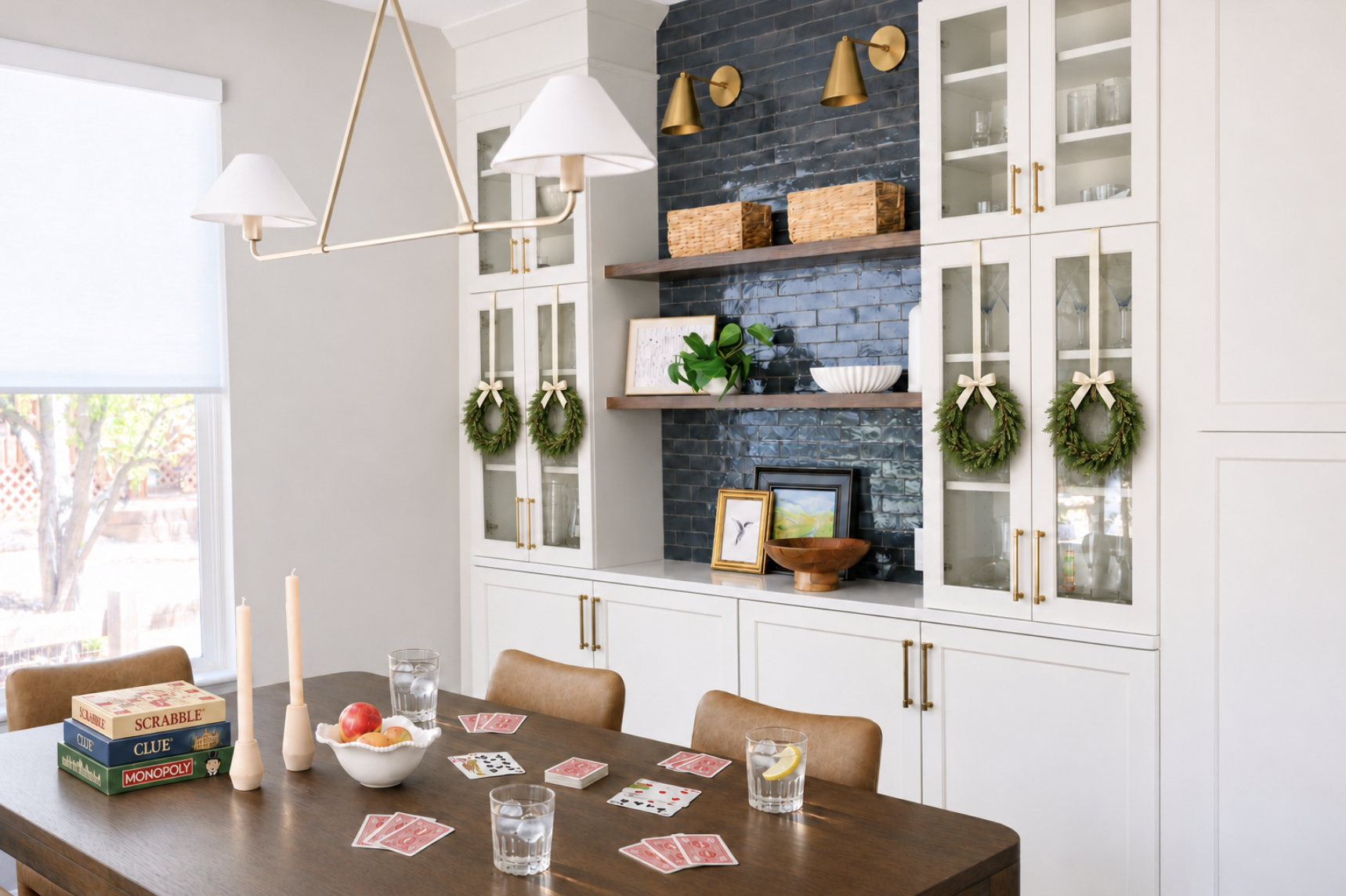
You can set a beautiful table, light every candle, and put the drinks exactly where you want people to gather. Someone will still pull up a stool beside the person peeling potatoes. Then someone else. Before long, the kitchen has become the party.
The holidays have a way of revealing the places we feel most at home. The seat everyone wants. The corner where conversations stretch long past dessert. The room where three generations somehow end up doing completely different things, together.
As designers, we pay attention to those patterns. They tell us something about what makes a space inviting—and how a home can make room for the traditions that return every year.
Give people a place near the action
There’s a reason people gather in the kitchen. It’s where something is happening. Someone is stirring, someone is tasting, and someone is offering advice that was absolutely not requested.
A welcoming kitchen gives people a place to join in without standing directly in the cook’s path. That might mean stools along an island, a small table nearby, or a clear connection to seating in the next room. The goal is to keep the conversation close while leaving room to open the oven.
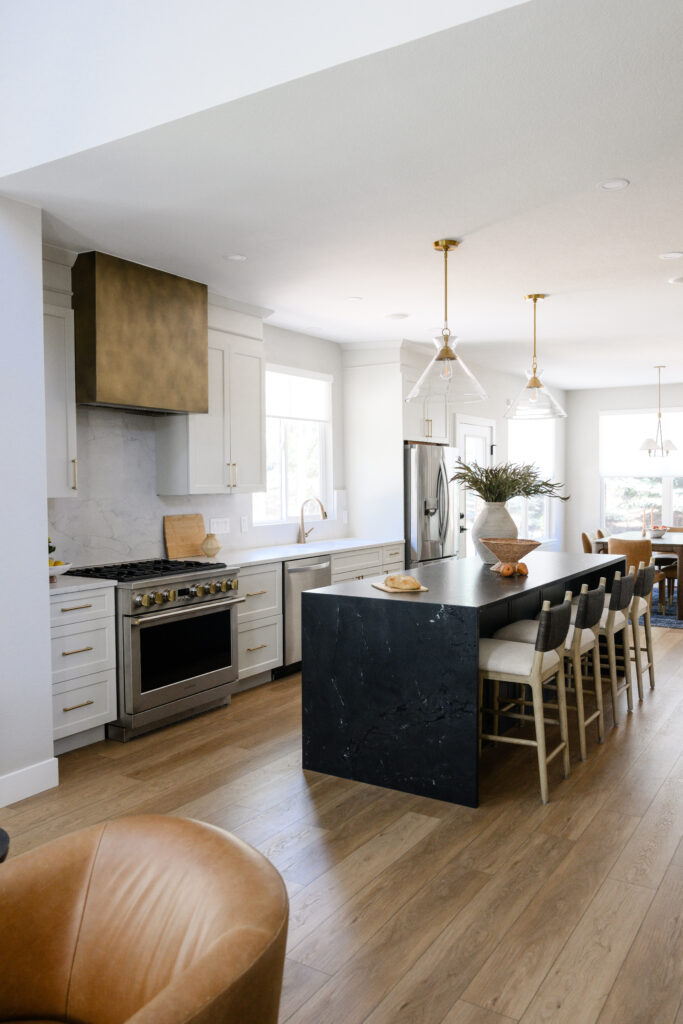
Think about the smaller movements, too. Can someone refill a glass without crossing the busiest part of the kitchen? Is there somewhere to put appetizers that won’t compete with dinner prep? These decisions can help the person hosting spend more of the evening enjoying it.
Choose the chair that earns a second helping
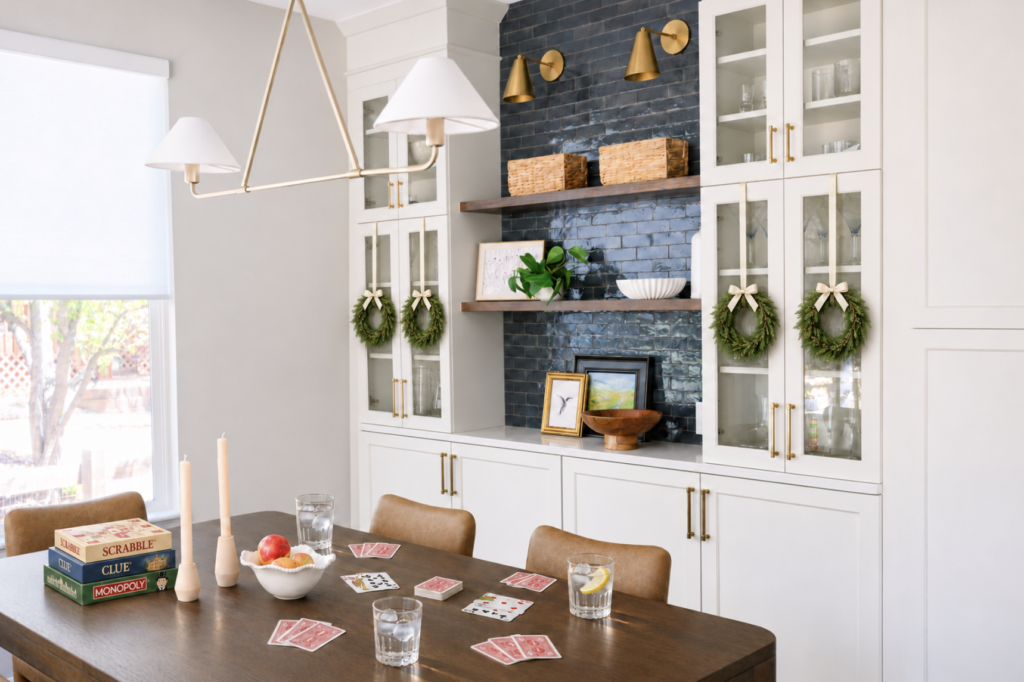
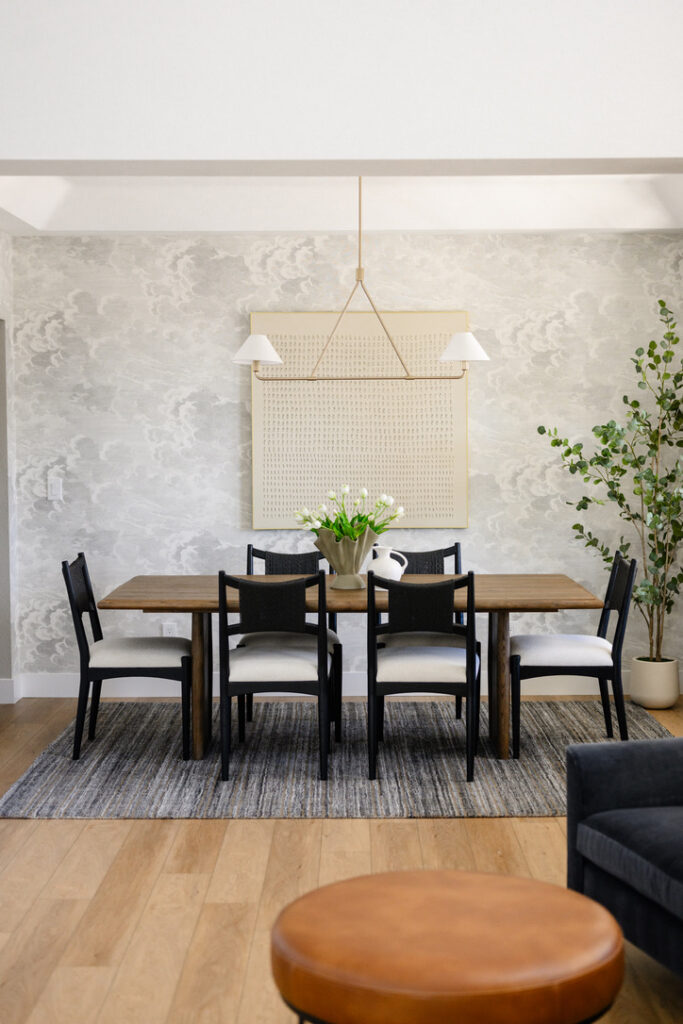
A dining chair has a real job to do once the photos are taken. By the time dinner turns into another story, another slice of pie, and a spirited debate about the rules of a board game, comfort matters.
We think about how a chair supports you, how it sits in relation to the table, and how much room there is to pull it out. Upholstery should suit the people using it. A beautiful fabric becomes much easier to love when a little gravy doesn’t bring the evening to a halt.
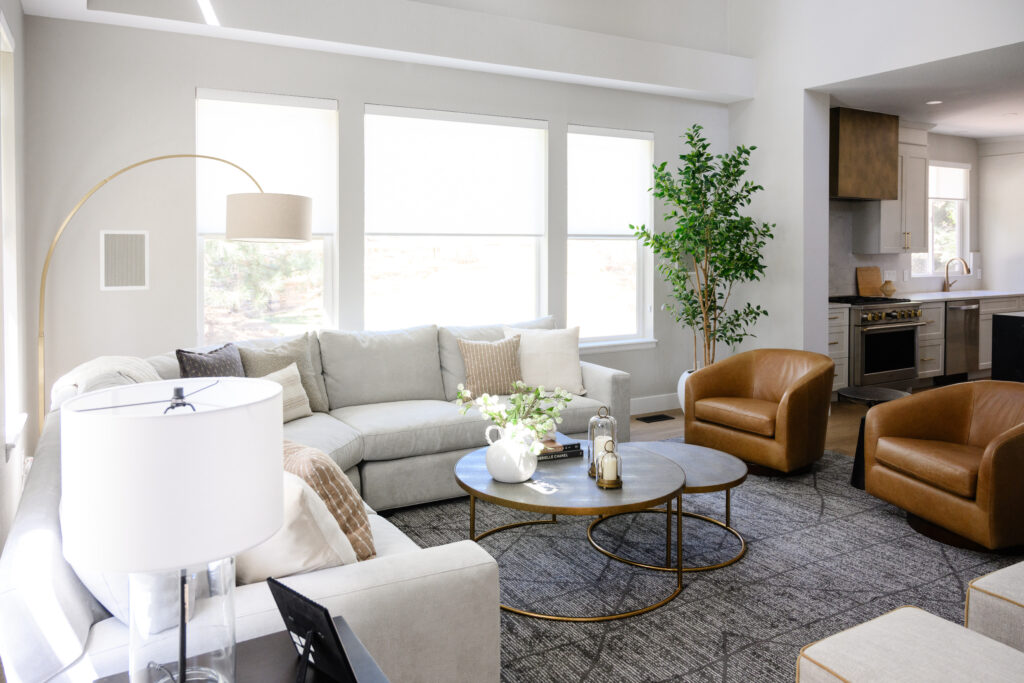
The same care belongs in the living room. Seating arranged within comfortable conversation distance helps people settle in. A small table within reach gives a drink somewhere to land. An ottoman can offer a place to put your feet up or pull into the group when the cousins arrive.
Let the house settle into evening
Holiday meals often begin in afternoon daylight and end well after dark. The lighting should be able to make that transition, too.
Keep useful light where food is being prepared, then bring a softer glow to the spaces where people linger. A dimmed dining fixture, a lamp beside the sofa, or sconces in an adjoining room can make the whole house feel more inviting as the evening goes on.
Materials contribute to that comfort as well. Wood adds warmth, upholstery softens the room, and a rug can help define the place where people sit together. Those layers give the space a welcoming foundation before the holiday decorations ever come out.
Leave room for the traditions
Holiday traditions have a physical footprint. The puzzle that takes over a table for three days. The spot where the kids sort their Halloween candy before anyone is ready to talk about Thanksgiving. The familiar decorations that return each year, regardless of what the rest of the room is doing.
A home needs a little flexibility to hold all of it. Leave a surface available for an activity. Keep extra seating somewhere accessible. Give the serving pieces you actually use storage that makes sense. Every corner doesn’t need to be styled into a permanent arrangement.
This is exactly how our Stonedale Project was designed – to offer a look at this approach to connected living spaces. As you browse the photos, consider where you’d pull up a chair, put down a glass, or settle in for the evening.
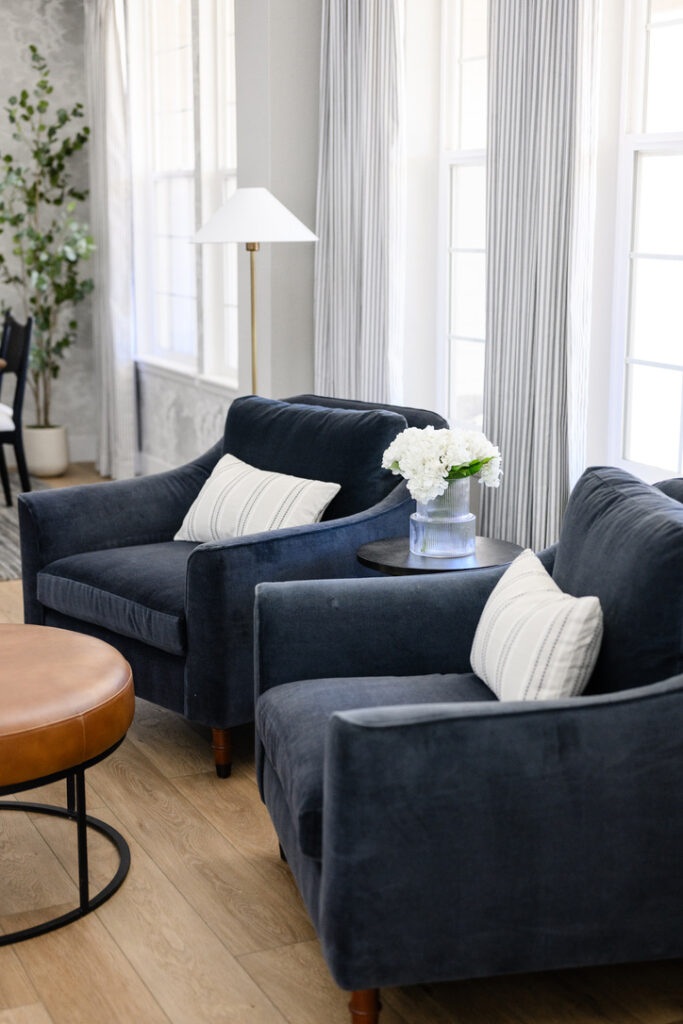
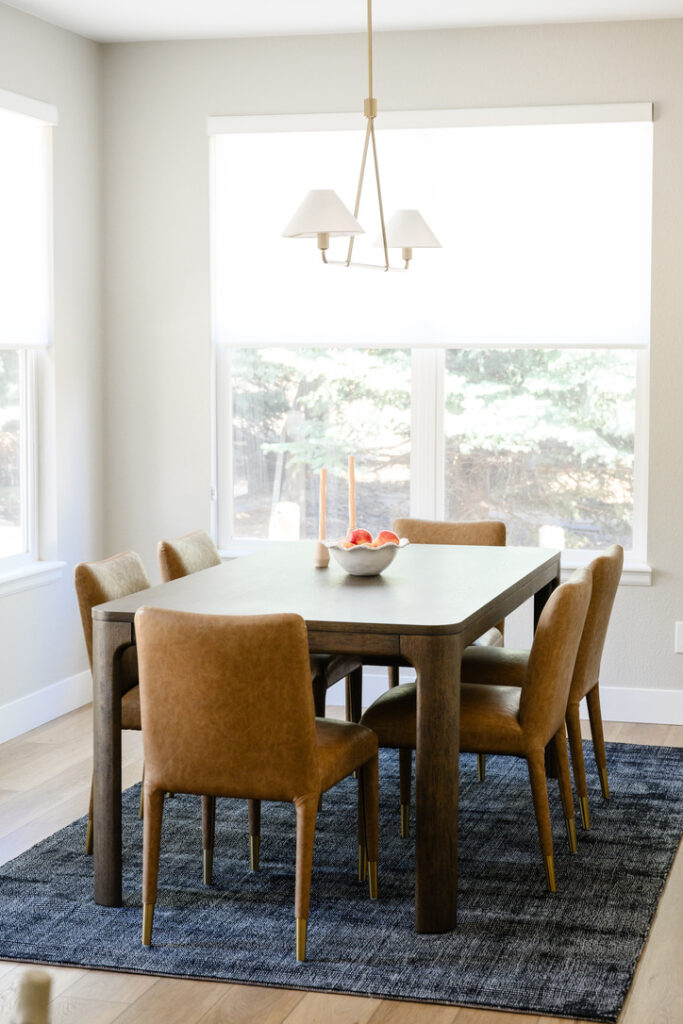
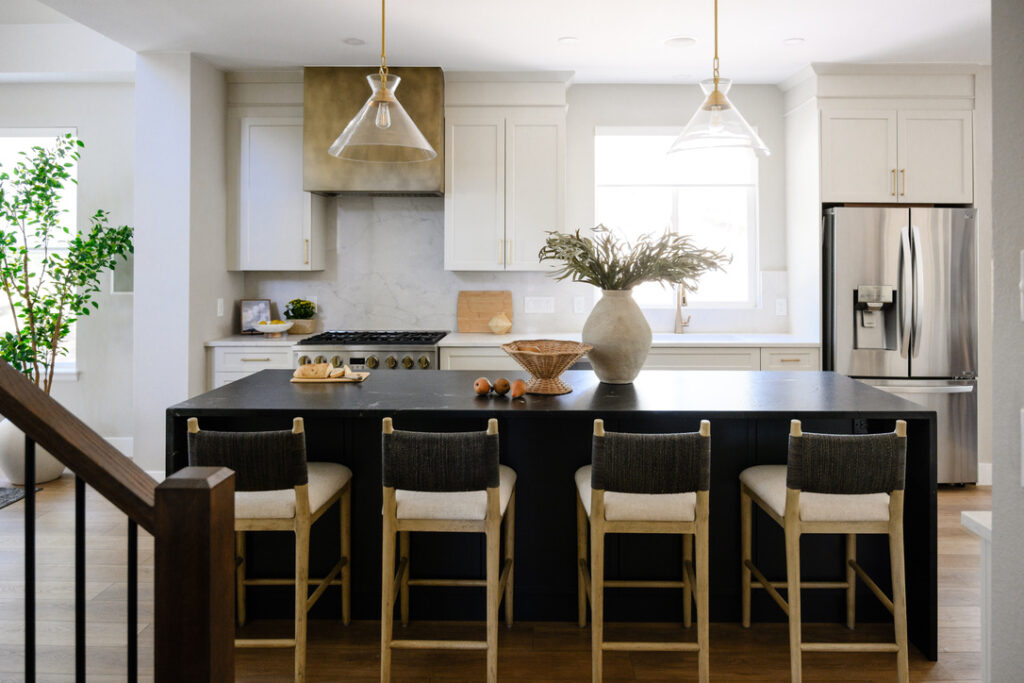
The holidays can offer useful clues about your own home, too. Notice where people gather naturally and where things feel awkward. A chair that keeps getting moved or a room everyone passes by might tell you more than another saved inspiration photo.
At KBD, we love helping those observations become thoughtful design decisions. Because a home feels especially good when there’s room for your people, your familiar rituals, and whoever inevitably wanders back into the kitchen.
Ready to make your home feel more inviting through the holidays and every day after? Connect with Katie Becker Design to start the conversation.


